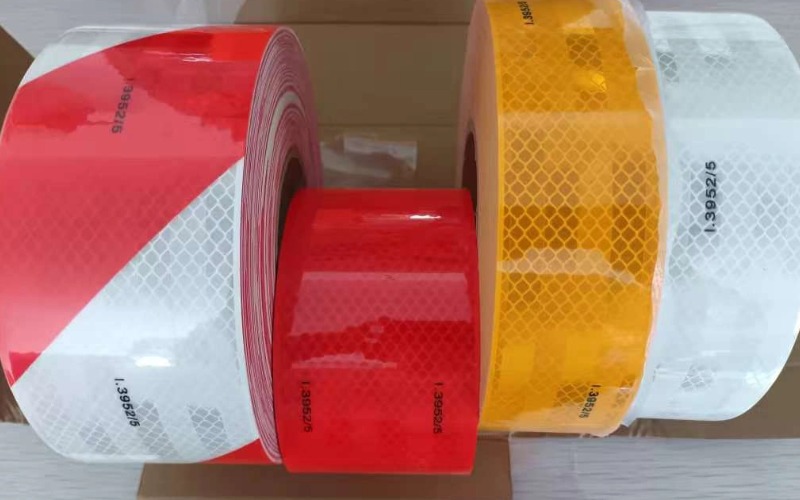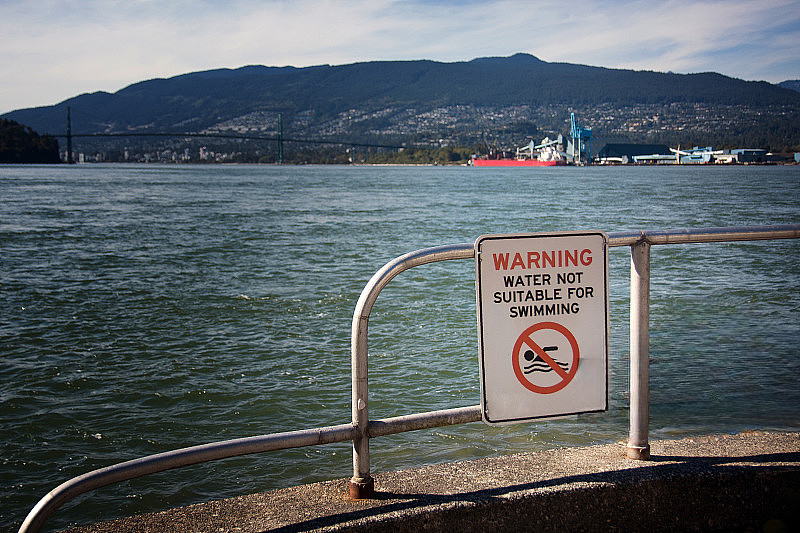
The new national standard implemented in 2012 (GB/T 18833-2012) adjusted the grades of national standard reflective sheeting from the old standard's "five grades" to "seven categories." National standard reflective sheeting forms the core application system for road traffic scenarios. Meanwhile, Type IV national standard reflective sheeting, with its unique advantage of "performance close to diamond grade and better cost-effectiveness," has become the "cost-effective choice" for mid-to-high-end road safety.
I. Positioning of Type IV National Standard Reflective Sheeting
1.Type IV National Standard Reflective Sheeting has the advantage of "bridging the gap"
Differences between reflective sheeting types exist to balance safety and cost.
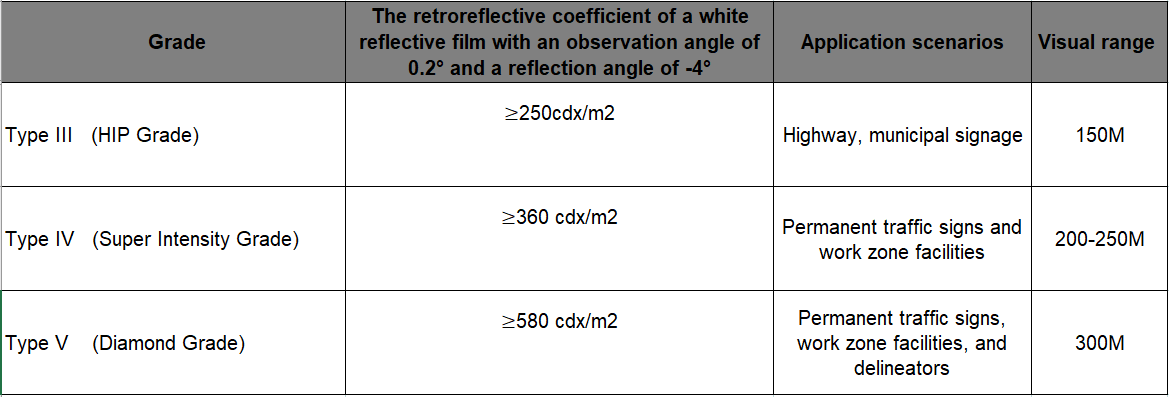
According to the chart, the core performance indicators of Type IV national standard reflective sheeting are in the middle range. Its retroreflective performance is better than Type III (High-Intensity Grade) and close to Type V (Diamond Grade) national standard reflective sheeting. Its weather resistance is the same as Type V sheeting, but its cost is significantly lower.
This shows that choosing Type IV national standard reflective sheeting is not a compromise, but rather finding the most cost-effective choice considering policy, performance, and cost, making high-end safety a standard feature. At the same time, this positioning of "comparable to Diamond Grade above, covering High-Intensity Grade below" gives it significant competitiveness in scenarios with limited budgets but high safety requirements.
The Safety Value of Type IV National Standard Reflective Sheeting
The visual recognition level of Type IV national standard reflective sheeting is higher than that of Class III. It upgrades "can be seen" to "seen earlier," providing drivers with more reaction time.
Compared to reflective sheeting with a glass bead structure, Type IV sheeting, which uses a microprismatic structure, offers much better wet-night retroreflection performance. This ensures that even in adverse weather conditions, Type IV sheeting maintains high visibility, providing all-weather protection.
Type IV national standard reflective sheeting has visual distance performance close to Type V. When budgets are tight, choosing Type IV sheeting can provide long-term adaptation for signs in conditions such as night driving and complex road situations, especially facing low-visibility environments like heavy rain and fog.

The "Technical Confidence" of Type IV National Standard Reflective Sheeting
In terms of light efficiency, the coefficient of retroreflection (RA) of Type III national standard reflective sheeting is not as high as that of Type IV. This means that under the same lighting conditions, signs made with Type IV sheeting will be brighter and discovered earlier.
In terms of material selection, Type IV national standard reflective sheeting typically uses acrylic as the core base material. Its anti-UV performance ensures no yellowing or peeling occurs outdoors for 10 years.
More importantly, processed acrylic material can resolve the contradiction between "durability and workability." It can resist tearing, scratching, and adapt to extreme temperature variations. Even under strong UV exposure and acid rain erosion on highways, all performance indicators can still remain above the national standard, resulting in a lower total cost of ownership over its full life cycle.
II. Application Scenarios for Type IV National Standard Reflective Sheeting
Highway Scenarios
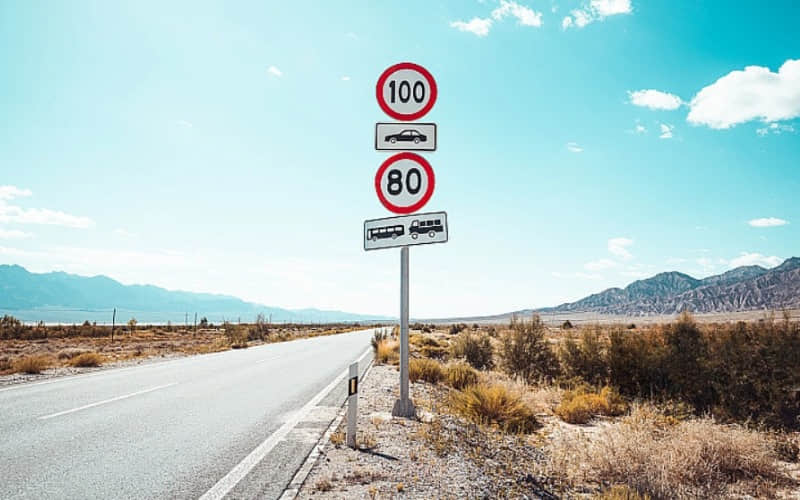
On highways with design speeds greater than 100 km/h, if a sudden incident occurs at night, drivers need sufficient sight distance to perform emergency braking.
The visual distance provided by traditional Type III national standard reflective sheeting can no longer fully meet the safety needs of high-speed driving. In such cases, long-distance visual recognition can determine the critical braking distance, which can be a matter of life and death.
Therefore, the visual distance of Type IV national standard reflective sheeting becomes an advantage. Its visual distance is higher than that of Type III, significantly extending emergency braking reaction time and increasing the effective braking distance to a safe range.
Rural Road Upgrade Scenarios
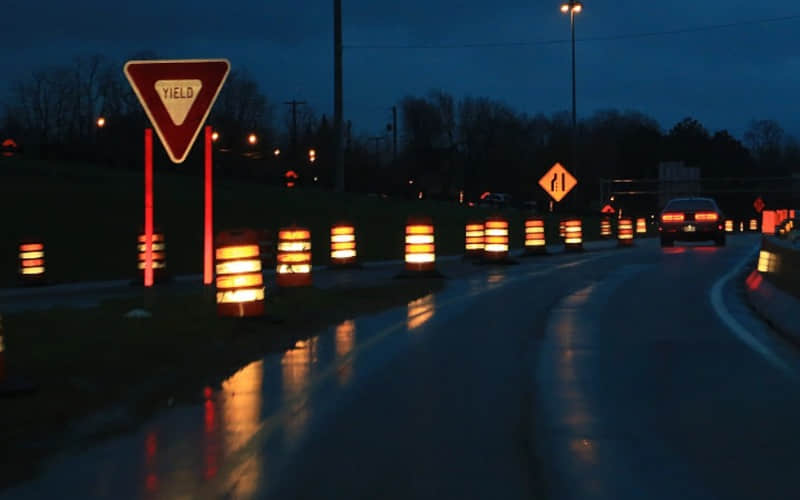
The "Design Guidelines for Low-Volume Rural Roads" require upgrading the grade of reflective facilities in key sections such as those adjacent to water bodies or cliffs, sharp curves, and steep slopes. However, rural roads commonly use traditionalType I, Type II, or non-national standard reflective sheeting. Due to their relatively short service life against weather, the annual replacement cost remains high.
In contrast, the 10-year weather resistance cycle of Type IV national standard reflective sheeting can significantly reduce the annual maintenance cost of rural roads, achieving "one-time investment, long-term benefits."
Taking the per-kilometer upgrade cost of a Type IV highway as an example, the initial investment for Type IV sheeting is higher than for Type I, Type II, and non-national standard sheeting, but the total cost of ownership over its full life cycle is actually lower. This is especially suitable for rural areas with low traffic volume but limited maintenance resources.
Urban Expressway Scenarios
Urban expressways often have dynamic traffic environments with multiple intersections, tidal flow lanes, etc. These conditions require reflective sheeting to maintain high recognizability even at small observation angles. Type IV national standard reflective sheeting performs well in terms of long-distance visibility. Its visual recognition distance ensures that signs are clearly identified by vehicles at sharp curves close to the sign, solving the problem of "blurred visual recognition at close-range sharp curves."
III. GB9100 Type IV Super High-Intensity Reflective Sheeting
GB 9100 Type IV Super High-Intensity Reflective Sheeting not only strictly complies with national standards in terms of product performance but also comes with corresponding guarantees for the finished sign's brightness, color values, weather resistance, adhesion, etc., matching the national standard grade. It provides assurance in use and is backed by supporting after-sales service.
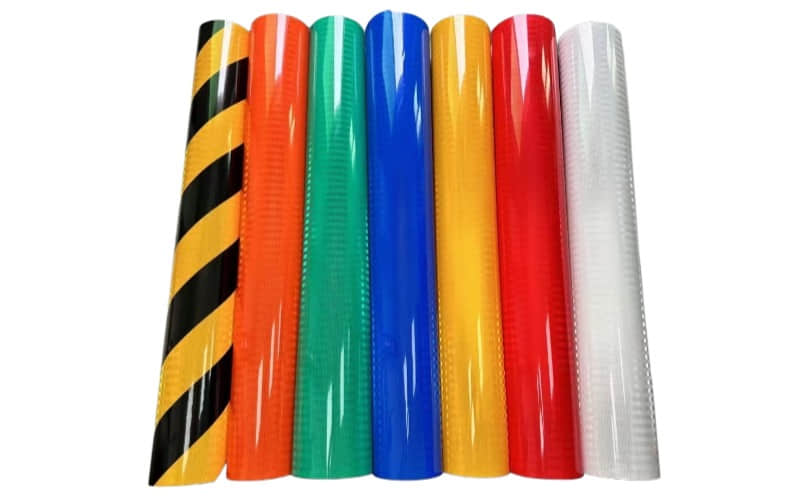
This product can be widely used in permanent traffic signs, road signs for various road classes, highway delineators, and other road reflective facility bidding projects.
Regarding processing,GB 9100 Type IV Super High-Intensity Reflective Sheeting supports engraving, screen printing, spray painting, and digital printing processes, and comes with corresponding after-sales service.
END
When discussing road safety, Type IV national standard reflective sheeting, with its advantages of strong weather resistance and low maintenance costs, can be applied in rural scenarios with many curves and poor lighting conditions, ensuring signs are clearly visible at night and in adverse weather, adapting to multiple scenarios. GB 9100 Type IV Super High-Intensity Reflective Sheeting provides more assurance for safety.